
Modem a device that connects your home network to your Internet Service Provider (ISP). Is an Unsung hero of your internet life. A little box that runs big internet. Isn’t it crazy right? It’s the magic behind the internet. In today’s digital world, the internet has become as essential as electricity. Whether we are attending online classes, streaming movies, or working from home, one device silently makes all this possible — the modem. But what exactly is a modem, and how does it work? Let’s understand in simple words.
I ever wondered how the internet magically appears in my home? I open my laptop, connect to Wi-Fi, and websites just load. But never understood that behind this simple experience is a chain of hardware devices working together like a well-organized city transport system.
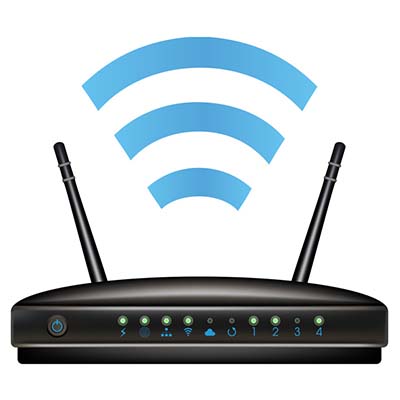
Unlocking Modem Mysteries
The word modem comes from two terms: MOdulator and DEModulator.
A modem is a device that connects your computer or router to the internet through a telephone line, cable, or fiber connection. Its main job is to convert digital data from your device into signals that can travel over communication lines—and then convert them back into digital data at the receiving end.
How Does a Modem Work?
Modulation:
Your computer sends digital data (0s and 1s). The modem converts this data into analog signals so it can travel through telephone or cable lines.Transmission:
These signals travel through your Internet Service Provider (ISP) to reach websites or online services.Demodulation:
When data comes back, the modem converts the analog signals into digital form so your device can understand it.How the Internet Reaches Your Home – A High-Level View
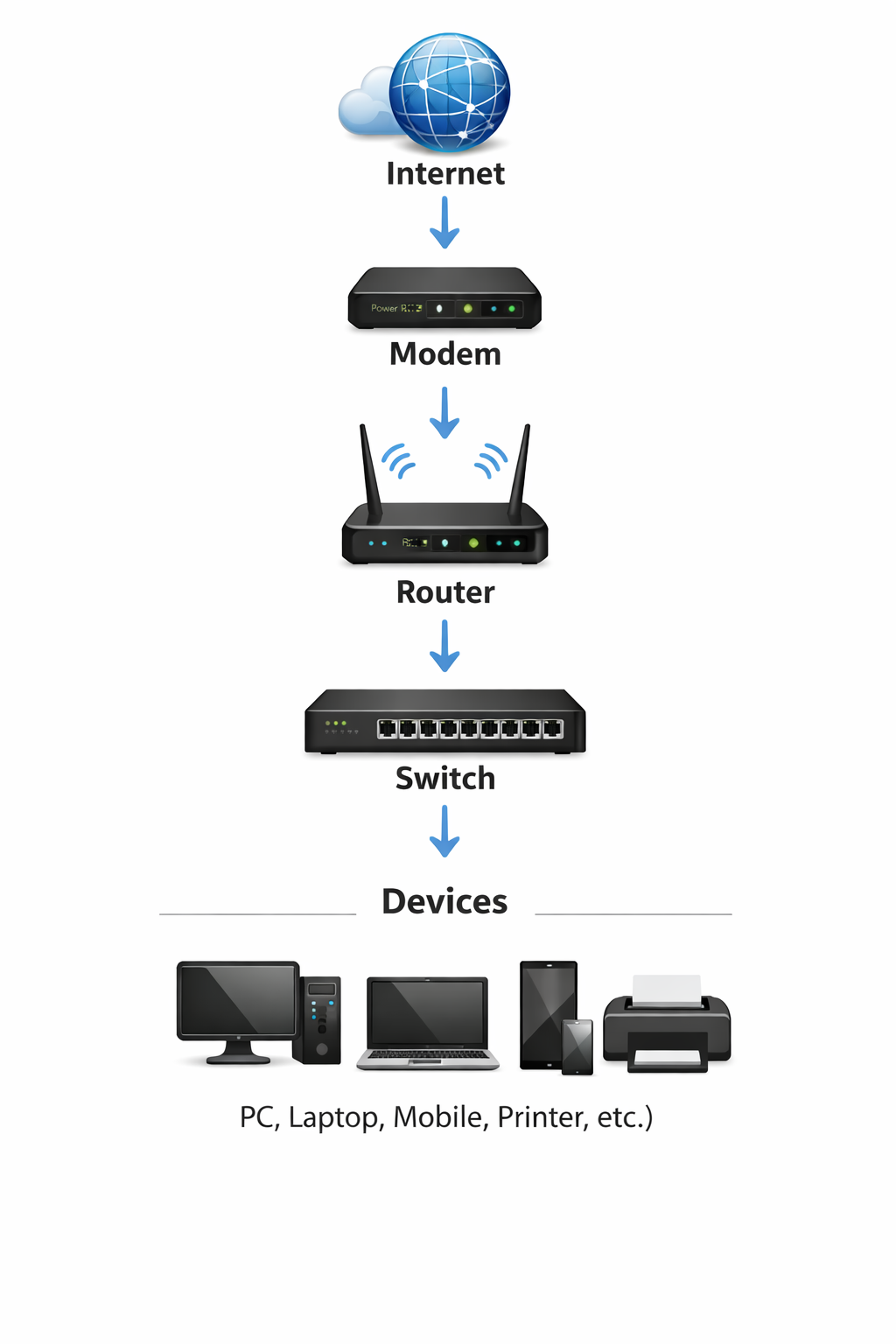
Think of the internet as a huge city filled with information. Your home or office is like one small house in that city. To reach your house, data travels:
Internet Service Provider (ISP) → Modem → Router → Switch/Wi-Fi → Your Devices
Each device has a clear job, just like in real life:
A toll booth checks entry
A traffic police directs vehicles
A post office sorts letters
The modem is like a toll booth at the highway entrance. It is the first gate between your private home network and the public internet. A modem does not manage devices inside your home. It only talks to the ISP.
The Router – The Traffic Police
If the modem is the toll booth, the router is the traffic police inside your house.
Responsibilities of a router:
Gives local IP addresses to your phone, laptop, TV
Decides which device should receive which data
Provides Wi-Fi
Adds security like firewall and password protection
Without a router, all devices would fight like cars without signals at a crossing.
Switch – The Post Office
A switch connects many wired devices in one network.
It sends data only to the correct device
Faster and smarter than old hubs
Types of Modems
Dial-up Modem:
Older technology that used telephone lines. It was slow and disconnected the phone while in use.DSL Modem:
Uses telephone lines but allows internet and phone to work together.Cable Modem:
Provides faster internet using cable TV lines.Fiber Modem:
The fastest type, using optical fiber technology for high-speed data transfer.Wireless Modem:
Works with mobile networks (like 4G/5G) to provide portable internet.
Modem vs Router – Are They Same?
Many people confuse modems with routers.
A modem connects your home to the internet.
A router shares that internet connection with multiple devices through Wi-Fi.
Often, both are combined into a single device called a modem-router combo.
Why is a Modem Important?
It is the first step to access the internet.
Converts data so communication is possible.
Determines internet speed and stability.
Essential for online learning, work, gaming, and entertainment.
Conclusion
The modem may be a small box sitting in the corner of your home, but it plays a huge role in keeping you connected to the world. Understanding how it works helps us appreciate the technology that powers our everyday digital life.